
160mm vs 180mm vs 200mm vs 220mm Rotors
Rotor size is one of the easiest upgrades you can make to your brakes - but which size is right for you? This guide breaks down the pros, cons, and best uses for every common rotor size.
How Rotor Size Affects Braking
Larger rotors provide two key benefits:
1. More Stopping Power
A larger rotor gives the brake caliper more leverage. The pads are further from the wheel's center, so the same clamping force creates more stopping torque. Going from 160mm to 180mm increases braking power by roughly 12%.
2. Better Heat Management
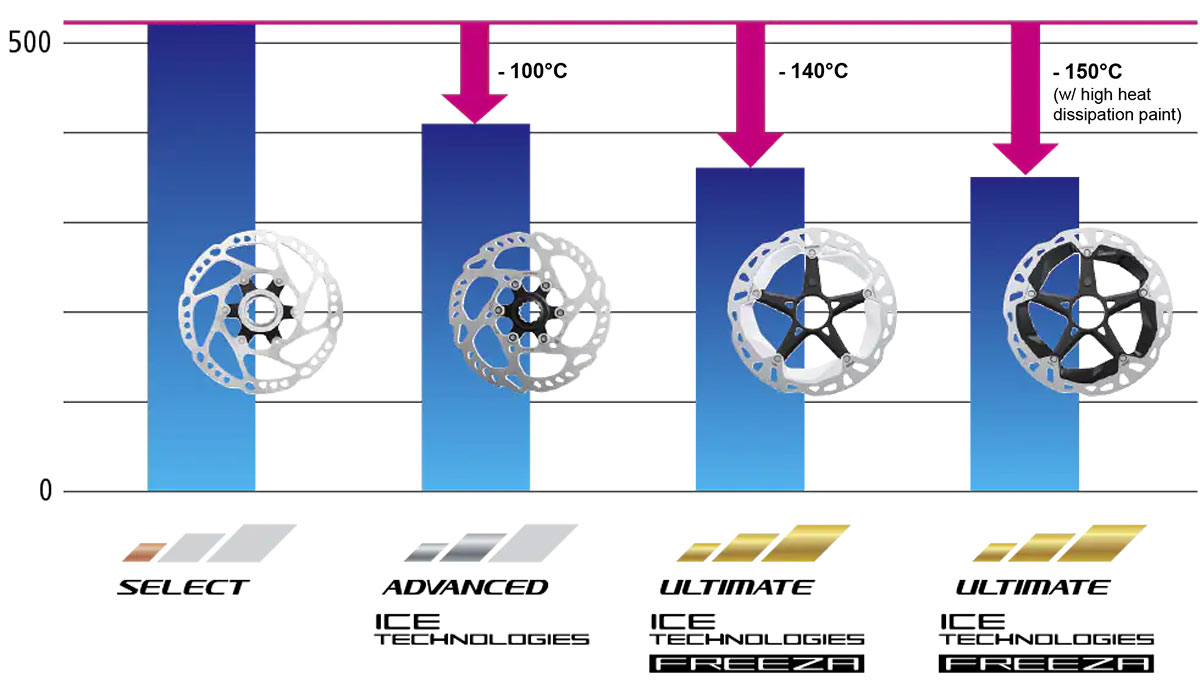
Larger rotors have more surface area to dissipate heat. This reduces brake fade on long descents and extends pad life. A 200mm rotor has about 56% more surface area than a 160mm rotor. In the chart below you can see the increase in surface are and the proportional decrease in temperatures. This applies for increasing the diameter of your rotor as well.
The Trade-Offs
- Weight: Larger rotors are heavier (typically 20-40g per size increase)
- Cost: Bigger rotors cost more
- Flex: Very large rotors (220mm+) can flex more under hard braking
- Compatibility: Your fork/frame must support the rotor size, and you may need adapters
Rotor Size Comparison

160mm
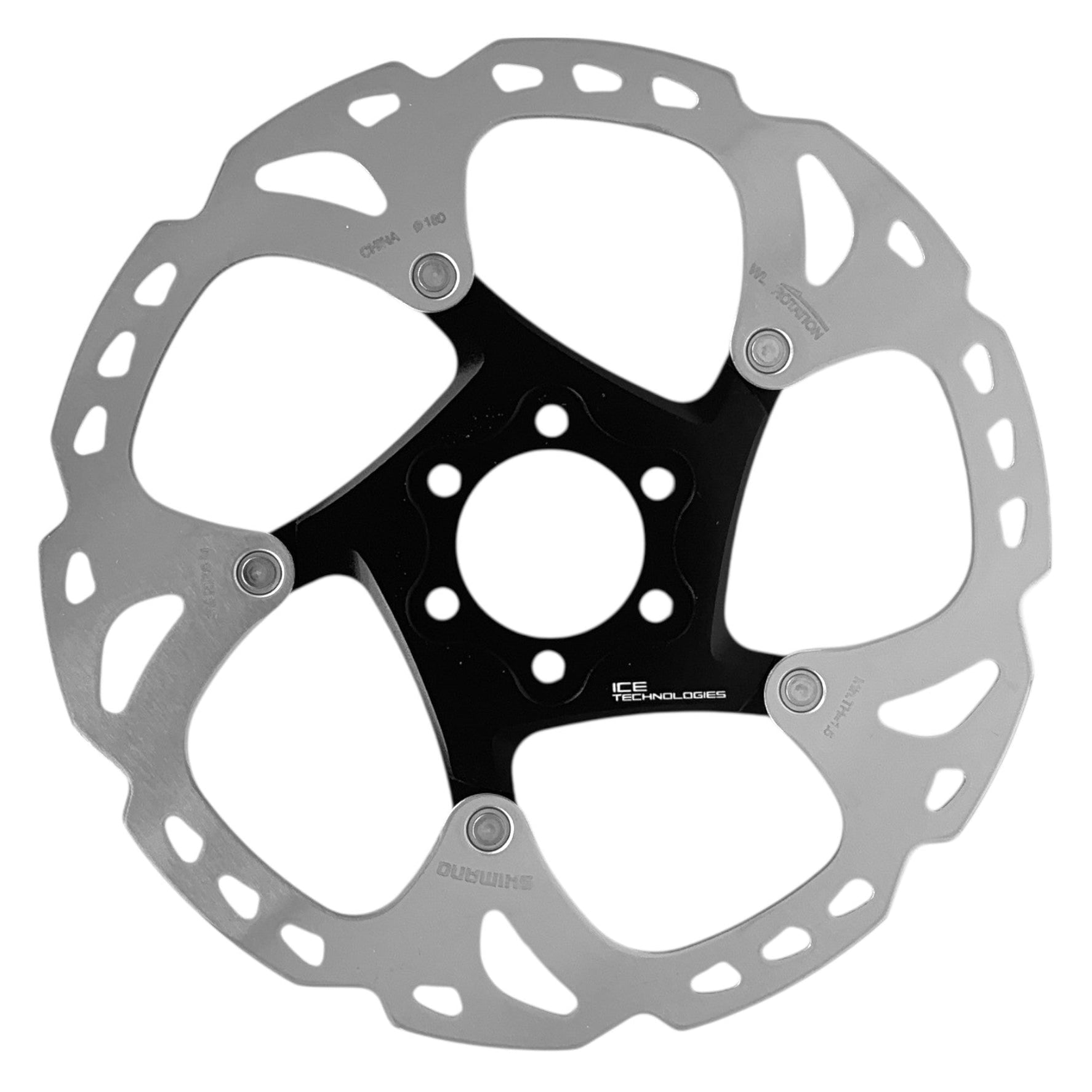
180mm
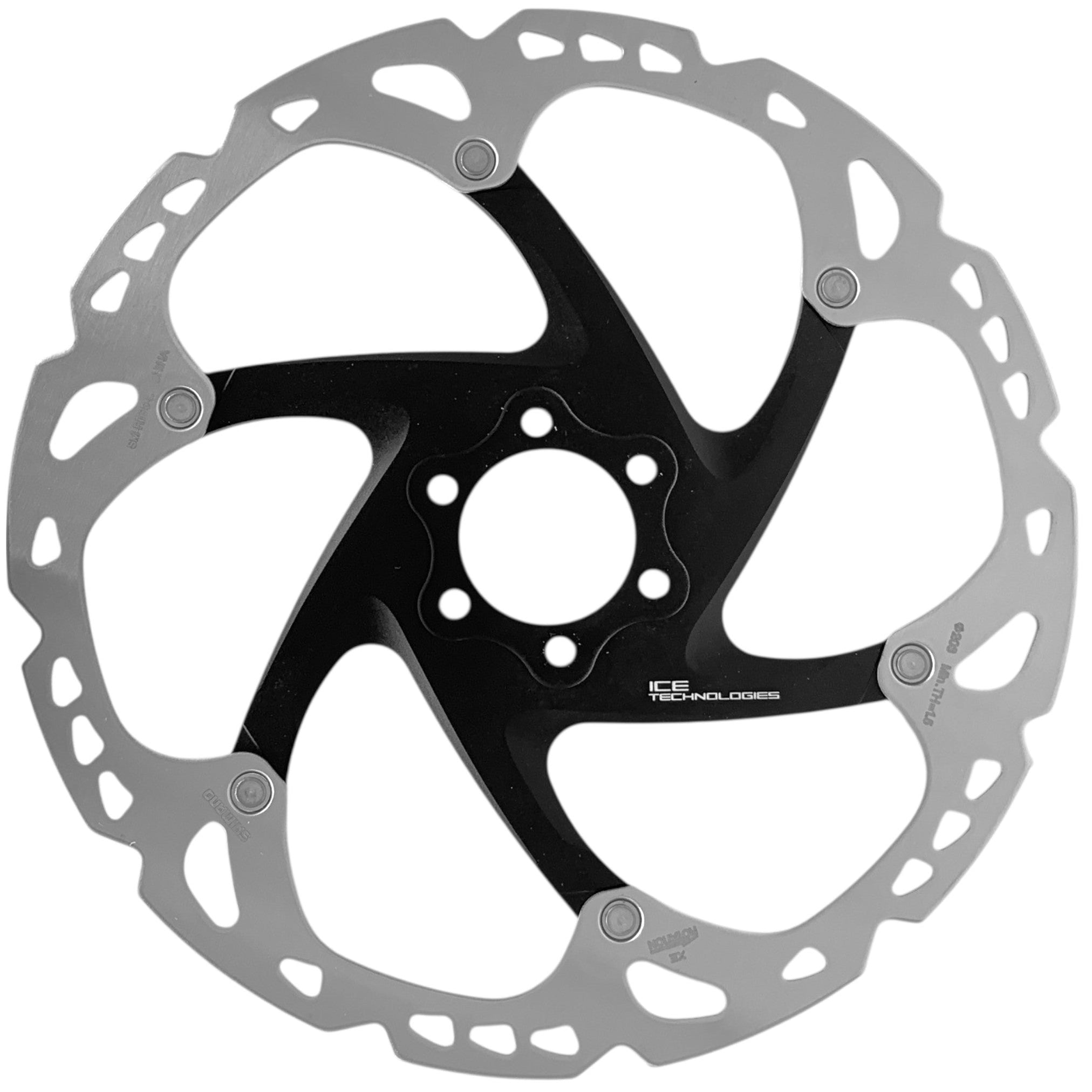
203mm
Shimano RT86 Ice Tech rotors in 160mm, 180mm, and 203mm sizes. Images: Thunder Mountain Bikes
| Size | Best For | Typical Weight |
|---|---|---|
| 140mm | Road bikes, gravel (rear) | ~85g |
| 160mm | XC racing, light trail, gravel (front) | ~95-115g |
| 180mm | Trail, all-mountain, most riders | ~115-140g |
| 200mm / 203mm | Enduro, e-bikes, heavier riders, steep terrain | ~140-170g |
| 220mm | Downhill, heavy e-bikes, bike park | ~170-200g |
Upgrading rotor size? You may need an adapter.
Going from 160mm to 180mm (or 180mm to 203mm) typically requires a caliper adapter. We stock Ramforce adapters for all common configurations.
What Size Should You Run?
Go with 180mm front / 160mm rear if:
- You're an XC rider prioritizing weight
- You ride mostly flat/rolling terrain
- You weigh under 150 lbs / 68 kg
Go with 180mm front and rear if:
- You're a general trail rider
- You want a good balance of power and weight
- You weigh 150-200 lbs / 68-90 kg
Go with 200-203mm front / 180mm rear if:
- You ride aggressive trail or enduro
- You weigh 180+ lbs / 82+ kg
- You ride an e-bike
- You ride long, steep descents
Go with 200-220mm front and rear if:
- You ride downhill or bike park
- You shuttle regularly
- You ride a heavy e-bike on steep terrain
How to Upgrade Your Rotor Size
- Check frame/fork compatibility: Most modern MTB frames support up to 203mm rear, and most forks support 180-220mm front
- Get the right adapter: You'll need an IS or Post Mount adapter for the size increase
- Match your rotor type: 6-bolt or Centerlock, depending on your hub
- Consider new pads: Fresh pads bed in better with new rotors
Upgrade Your Braking System
Questions? Email us at hello@loamgoat.com
You might also like
- How to True a Bent Disc Brake Rotor, five-minute on-bike truing procedure
- How to Replace a Disc Brake Rotor, 6-bolt, centerlock, and adapter procedures